5 Shooting Tips for Better Accuracy (Beginner to Advanced)
Whether you’re training for competition, sharpening your defensive skills, or just trying to tighten your groups at the range, improving shooting accuracy is an ongoing process — not a destination. Even experienced marksmen have room to refine their fundamentals.
Here are five proven shooting tips that work for beginners and advanced shooters alike, especially when paired with consistent practice on quality steel targets.
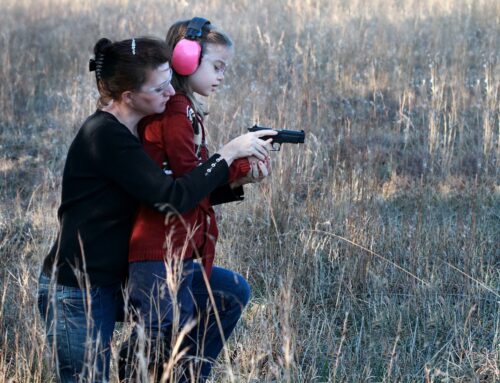
Whether you’re trying to tighten up your shot for competition or defense, or both, it’s a learning process every step of the way. Beginners and advanced marksmen can become more accurate by following these 5 shooting tips.
1. Know Your Firearm Inside and Out
The most accurate shooter in the world is only as good as their familiarity with their gun.
Before focusing on targets or distance, you need to deeply understand the firearm you’re using:
- Trigger pull weight and reset point — Know exactly when and how your trigger breaks. Anticipating the shot causes flinching, which kills accuracy.
- Sight picture and sight alignment — Whether you’re using iron sights or an optic, consistent sight alignment is non-negotiable.
- Reloading and malfunction clearing — Speed and muscle memory under pressure require repetition.
- Caliber and ballistics — Know your round’s trajectory, especially at longer distances.
Tip: Match your ammunition and target type to your firearm. A .22 LR rimfire round requires different targets and distances than a .308 rifle round. AR500 steel targets are rated for specific calibers and minimum safe distances — always check before shooting.
2. Master the Fundamentals Before Advancing
Accuracy problems almost always trace back to one of five fundamentals:
| Fundamental | What to Check |
|---|---|
| Grip | Consistent, firm grip that doesn’t shift between shots |
| Stance | Stable platform — isosceles or Weaver for handguns; prone or supported for rifles |
| Sight alignment | Front sight sharp, target slightly blurred (for iron sights) |
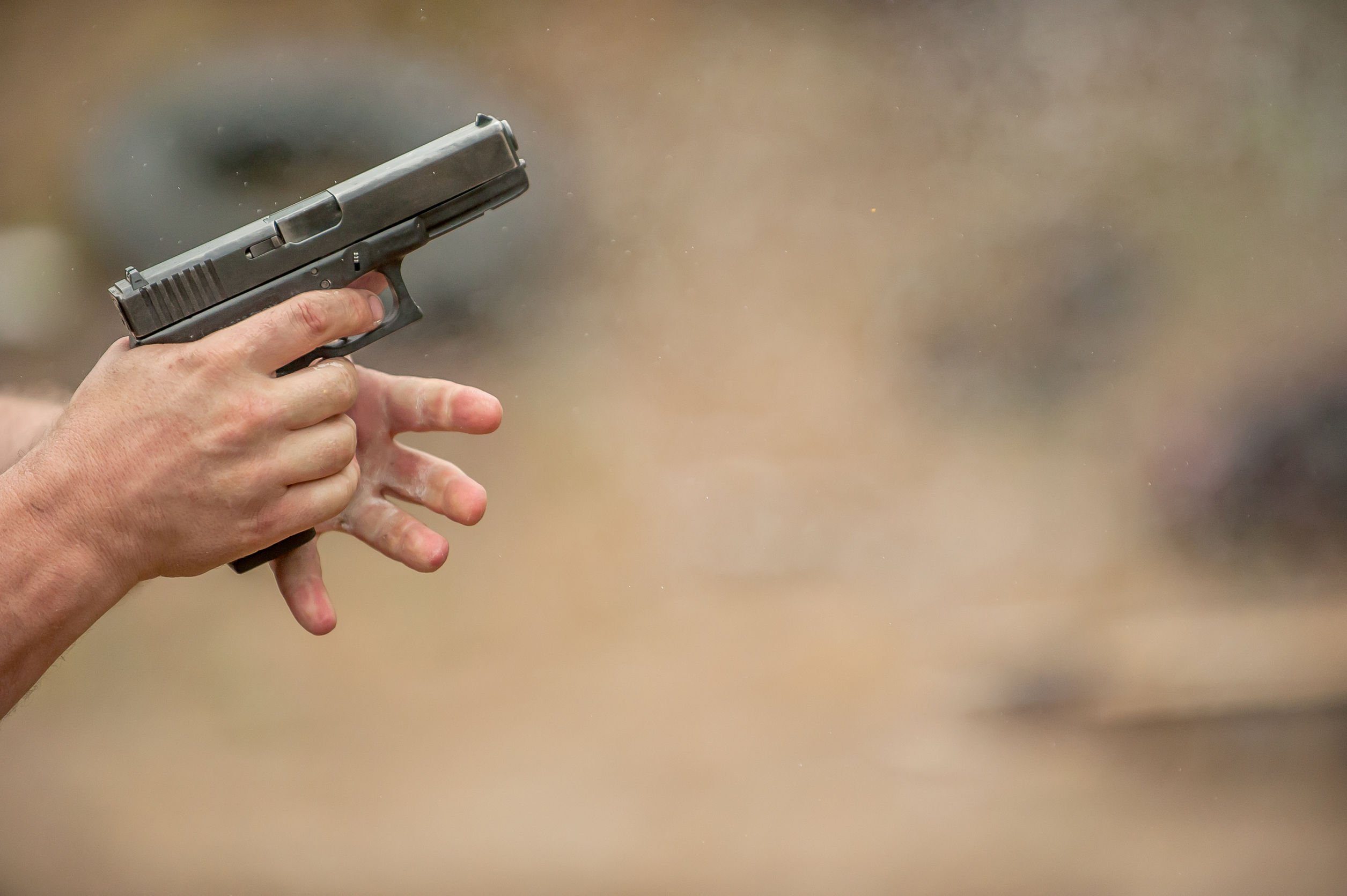
| Trigger control | Smooth, straight-back press — no jerking or slapping |
| Follow-through | Hold your position and sight picture through and after the shot breaks |
Many shooters skip these basics and jump straight to speed or distance. That’s backwards. Nail the fundamentals at close range first, then build out from there.
3. Learn to Read the Wind
Wind is the one variable in shooting that cannot be fully controlled — only understood.
Here’s how to get better at it:
- Watch the environment. Mirage shimmer, grass movement, and flag direction all tell you wind speed and direction.
- Use the clock system. A full-value wind blows directly from 3 or 9 o’clock. A half-value wind comes from 1, 2, 4, 5, 7, 8, 10, or 11 o’clock. No-value winds blow from 12 or 6.
- Start at mid-range, work to long range. Wind drift is negligible at 25 yards but significant at 300+. Practice at longer distances to develop this skill.
- Log your data. Keep a shot log that tracks conditions, hold-over, and results. Over time, patterns emerge.
Steel gong targets at varying distances give you instant audio feedback — when you hit, you hear it. That immediate confirmation makes wind-reading practice far more effective than paper targets.
4. Practice Consistently — and Purposefully
“Practice makes perfect” is only half true. Purposeful practice makes perfect.
Random range sessions build bad habits as easily as good ones. Structure your practice:
Dry fire at home:
- Costs nothing, builds trigger control and sight alignment
- Use a snap cap if your firearm requires it
- Focus on slow, deliberate trigger press
Live fire sessions:
- Start slow and close, then increase speed and distance
- Use a shot timer to track improvement
- Vary your drills: slow fire accuracy, rapid fire control, transition drills
Types of target shooting to master:
- Static accuracy — slow fire, single targets, maximum precision
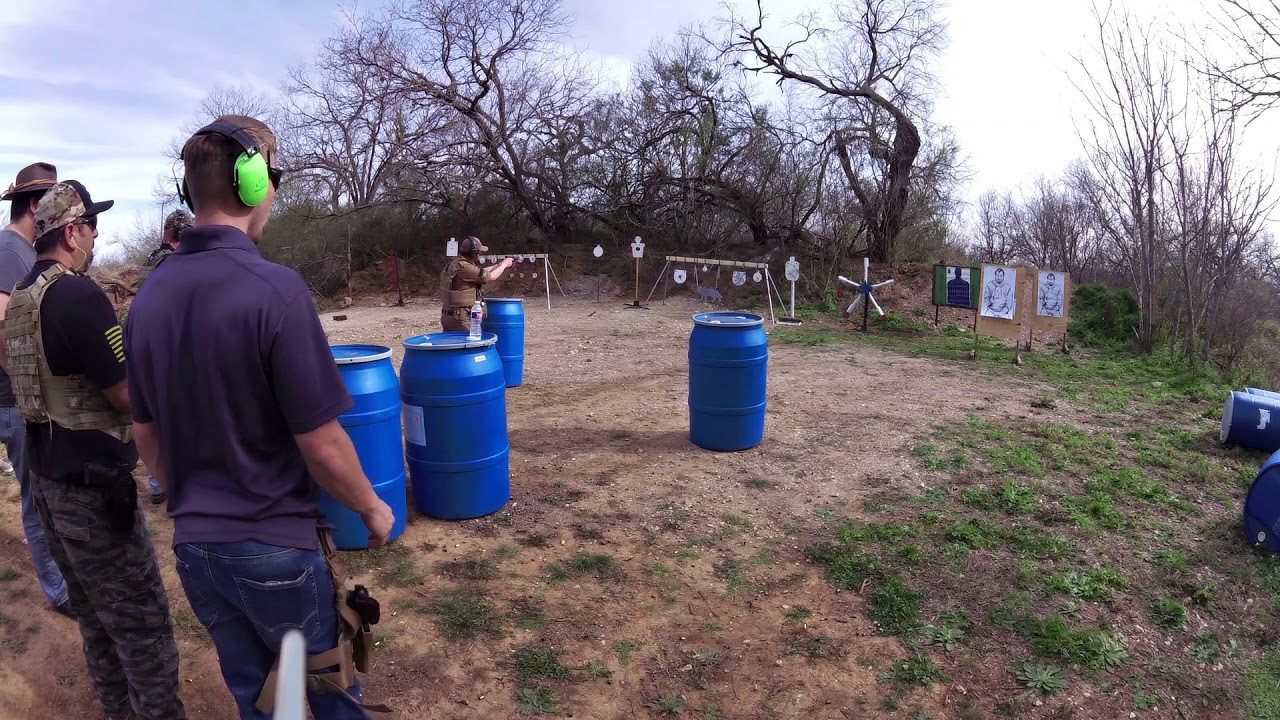
- Reactive/dynamic — moving targets, timed drills, multiple targets
- Long-range — wind reading, elevation adjustments, consistency
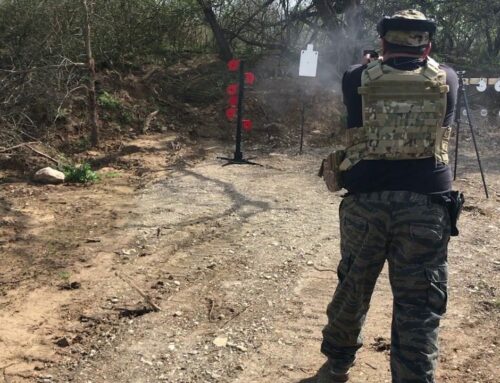
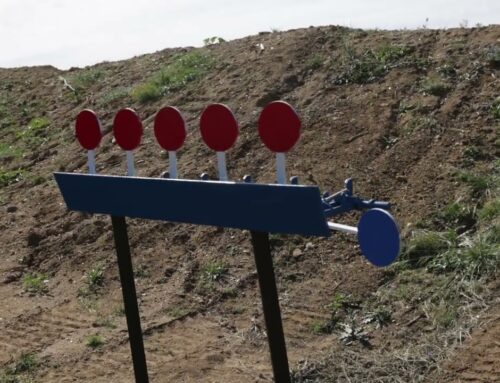
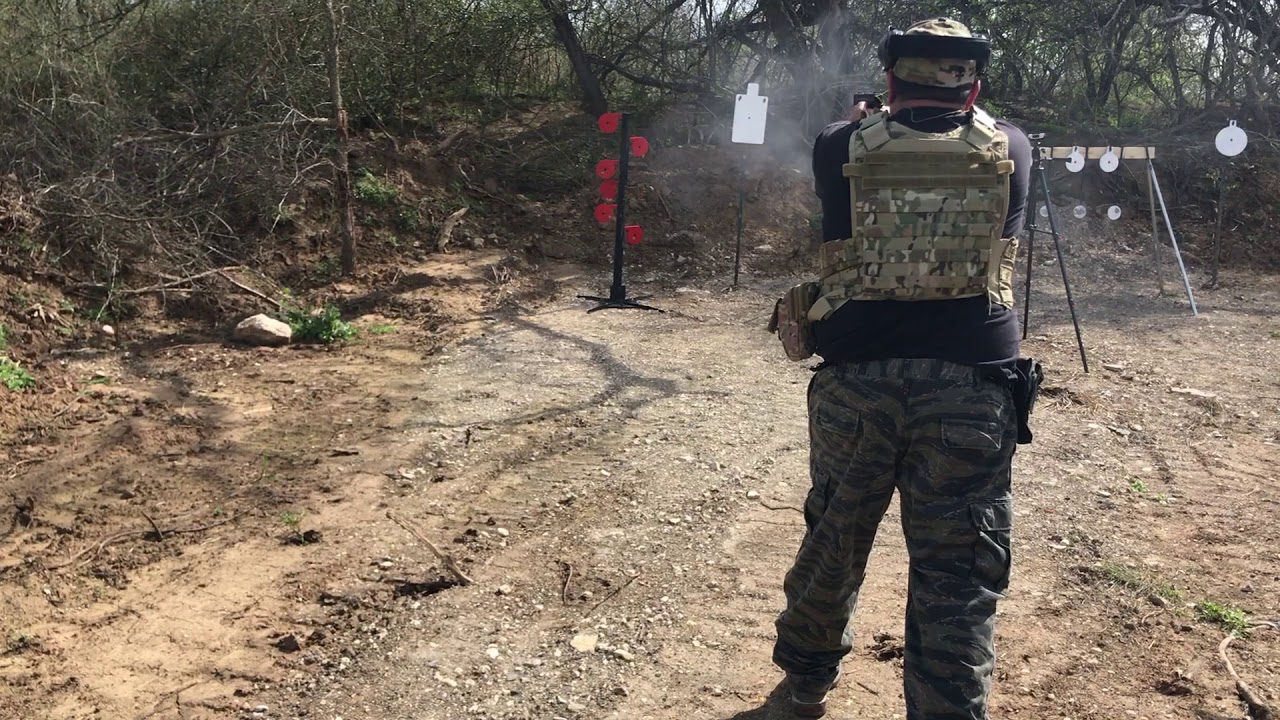
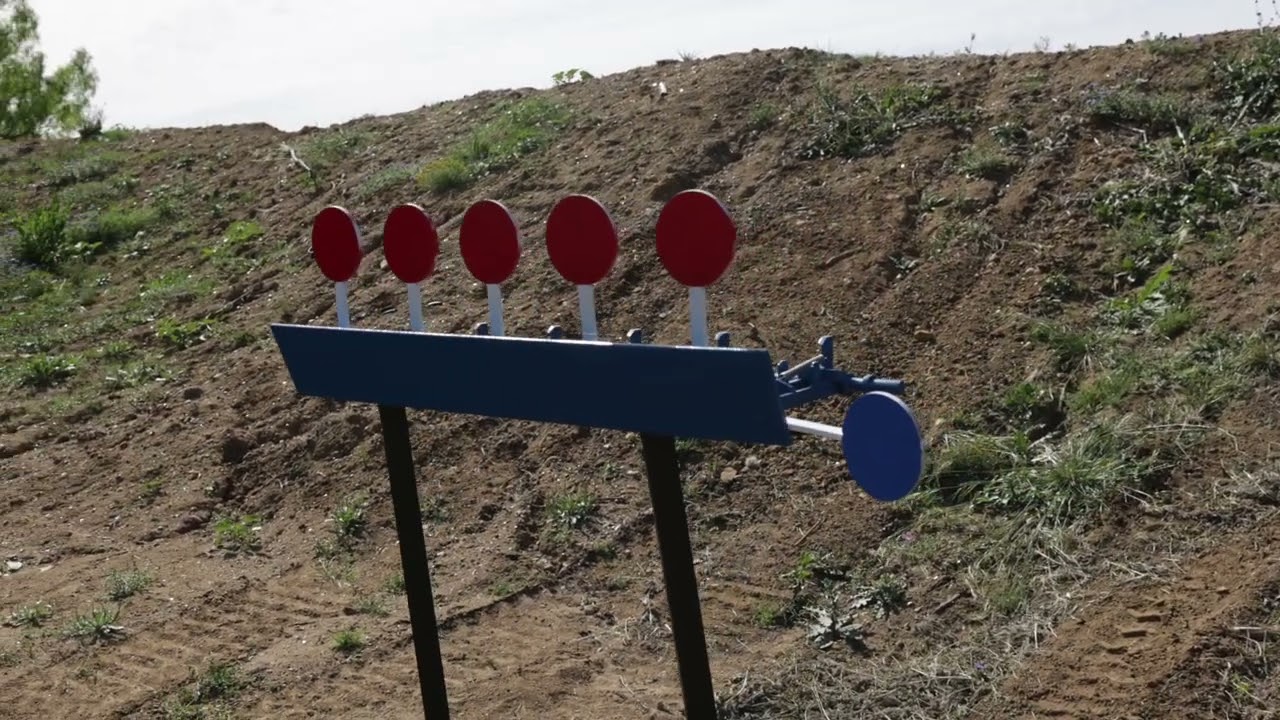
Reactive steel targets — like spinning plates, dueling trees, and poppers — are especially effective for building speed and accuracy simultaneously. The instant “ping” of a hit creates a training feedback loop that paper targets simply can’t replicate.
5. Choose the Right Targets — and Use Them Correctly
Not all targets are equal, and using the wrong target is both dangerous and counterproductive.
Here’s what to consider when selecting steel targets:
Steel Hardness
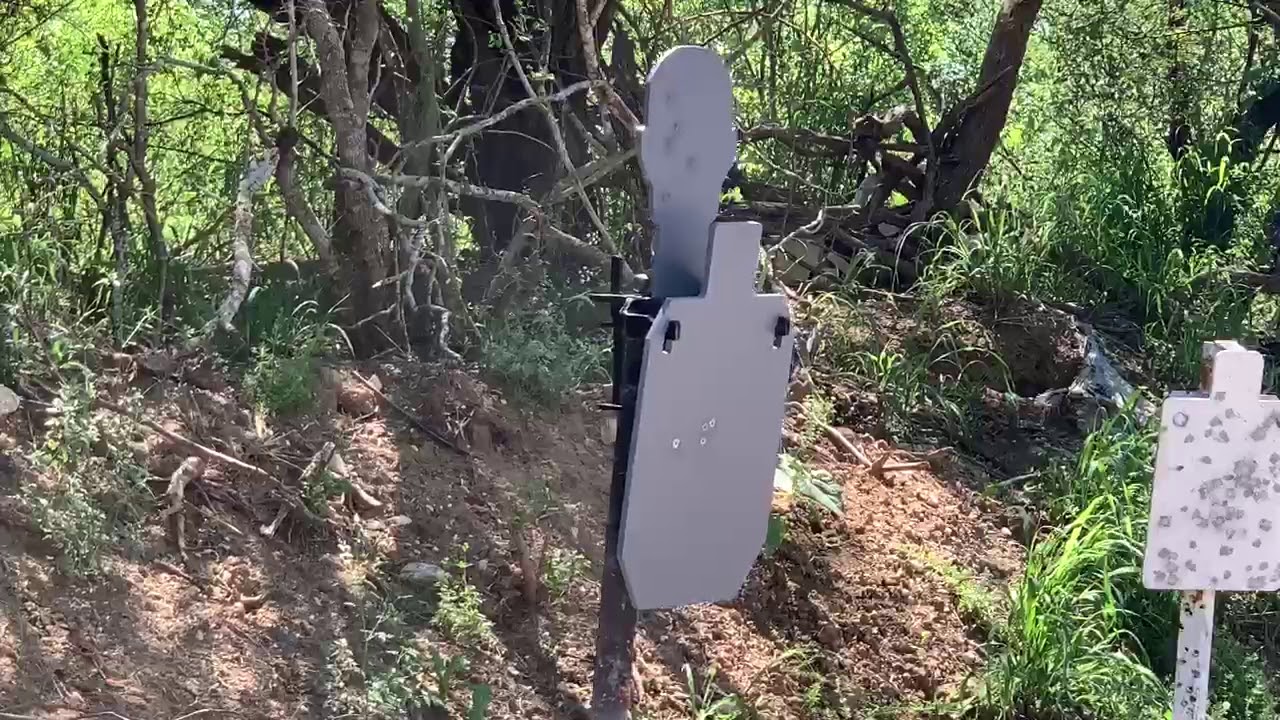
- AR500 steel is rated for high-velocity rifle and pistol rounds. It resists deformation and cratering that causes dangerous ricochets.
- Mild steel or lesser-grade targets dent and pit quickly, creating unpredictable deflection angles — a serious safety hazard.
Target Size and Distance
- Larger targets at closer range build confidence and basic skills.
- Smaller targets at greater distance develop precision.
- Always follow the manufacturer’s minimum safe distance guidelines for your caliber.
Target Condition
- Never shoot a damaged or deformed steel target. Dents, craters, and divots change the angle of bullet deflection and dramatically increase ricochet risk.
- Inspect targets before every session.
Match Target Type to Your Goal
| Goal | Recommended Target Type |
|---|---|
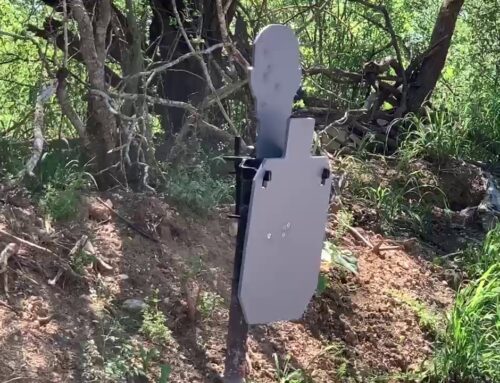
| Precision accuracy | Static gong or silhouette |
| Speed and transitions | Dueling tree or speed rack |
| Fun and reaction training | Texas Star, popper, KYL rack |
| Rimfire practice | Dedicated rimfire-rated plates |
6. Make Adjustments — and Track Them
Competitive shooting and even casual range work is a continuous feedback loop. What works on a calm 70°F day may not work in cold, humid, or windy conditions.
Key adjustments to track:
- Zero shifts — Temperature affects barrel harmonics and some optics. Re-check your zero seasonally.
- Stance modifications — Shooting from kneeling, seated, or supported positions changes your natural point of aim. Practice all of them.
- Distance variation — If your accuracy drops at a new distance, slow down and rebuild from fundamentals at that range.
The rule: if something isn’t working, don’t repeat it expecting different results. Diagnose the problem, adjust one variable at a time, and test.
Frequently Asked Questions About Shooting Accuracy
What is the most important factor in shooting accuracy?
Trigger control is widely considered the single biggest factor in accuracy. Jerking or slapping the trigger moves the barrel off target before the bullet exits. A smooth, straight-back press that doesn’t disturb the sight picture is the foundation of accurate shooting.
How far should I stand from a steel target?
Safe distances depend on your caliber and the target’s steel rating. As a general guideline, pistol calibers require a minimum of 10 yards from AR500 steel, while rifle calibers typically require 100 yards or more. Always follow the manufacturer’s specifications.
Does dry fire practice actually improve accuracy?
Yes. Dry fire is one of the most effective and underutilized training methods. It allows you to repeat thousands of trigger presses without cost or range access, building the muscle memory necessary for consistent accuracy.
What type of steel targets are best for beginners?
Larger static targets — like 10″ to 12″ steel gongs or silhouettes — are ideal for beginners. They’re forgiving enough to build confidence while still teaching fundamentals. As your accuracy improves, downsize the target or increase the distance.
How often should I practice to improve my shooting accuracy?
Even 15–20 minutes of dry fire daily will produce measurable improvement within weeks. For live fire, one to two structured range sessions per week is sufficient for most shooters to see consistent progress.
The Bottom Line
Improving shooting accuracy comes down to disciplined fundamentals, purposeful practice, and using the right equipment. Steel targets accelerate development because they provide immediate, tactile feedback — you hear every hit, every miss is obvious, and drills become measurably more engaging.
Whether you’re a first-time shooter or a seasoned competitor, these five principles apply at every level. Master them, and your accuracy will follow.
AR500 Steel-Targets carries a full range of AR500 steel targets for pistol, rifle, and rimfire — from beginner-friendly gongs to competitive reactive targets. Shop our best-selling targets or browse all target shapes.
{
“@context”: “https://schema.org”,
“@type”: “FAQPage”,
“mainEntity”: [
{
“@type”: “Question”,
“name”: “What is the most important factor in shooting accuracy?”,
“acceptedAnswer”: {
“@type”: “Answer”,
“text”: “Trigger control is widely considered the single biggest factor in accuracy. A smooth, straight-back press that doesn’t disturb the sight picture is the foundation of accurate shooting.”
}
},
{
“@type”: “Question”,
“name”: “How far should I stand from a steel target?”,
“acceptedAnswer”: {
“@type”: “Answer”,
“text”: “Pistol calibers require a minimum of 10 yards from AR500 steel, while rifle calibers typically require 100 yards or more. Always follow the manufacturer’s specifications.”
}
},
{
“@type”: “Question”,
“name”: “Does dry fire practice actually improve accuracy?”,
“acceptedAnswer”: {
“@type”: “Answer”,
“text”: “Yes. Dry fire allows you to repeat thousands of trigger presses without cost or range access, building the muscle memory necessary for consistent accuracy.”
}
},
{
“@type”: “Question”,
“name”: “What type of steel targets are best for beginners?”,
“acceptedAnswer”: {
“@type”: “Answer”,
“text”: “Larger static targets like 10-12 inch steel gongs or silhouettes are ideal for beginners. As accuracy improves, downsize the target or increase the distance.”
}
},
{
“@type”: “Question”,
“name”: “How often should I practice to improve my shooting accuracy?”,
“acceptedAnswer”: {
“@type”: “Answer”,
“text”: “Even 15-20 minutes of dry fire daily will produce measurable improvement within weeks. One to two structured live fire sessions per week is sufficient for most shooters.”
}
}
]
}